


Russia has built 3,700 kilometres of high-speed roads in five years — Marat Khusnullin
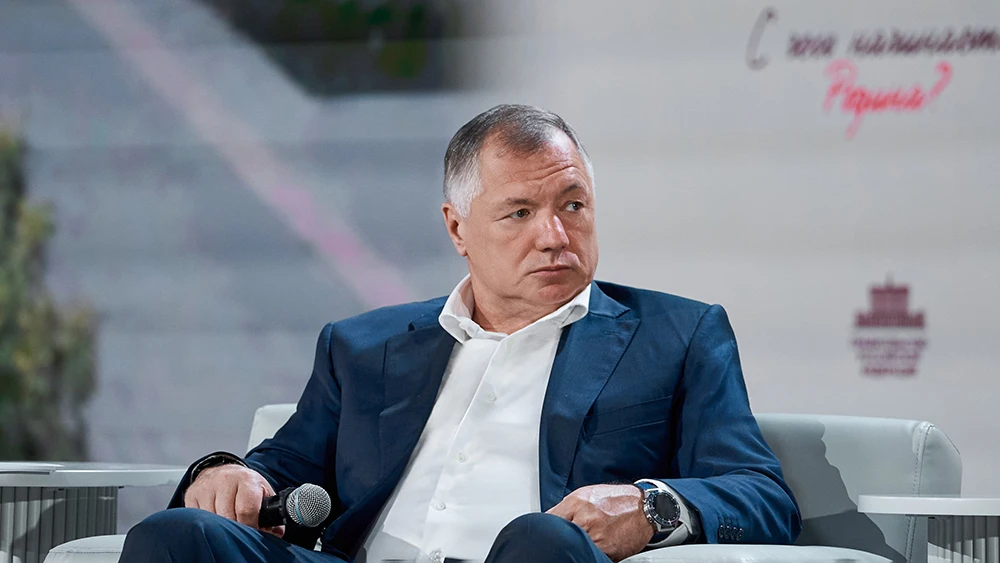
Transport accessibility directly affects where people choose
to live and how easily they can reach work, school and their loved ones. The
Deputy Prime Minister of the Russian Federation, Marat Khusnullin, discussed
the development of high-speed and regional roads, rail services and
comprehensive improvements to quality of life at the meeting "Motherland Is People. Quality Housing and Transport Infrastructure", held on 26
August at the National Centre RUSSIA as part of the project "What Does the
Motherland Begin With?".
"Transport accessibility is one of the most important
factors affecting where people live. Today, we are taking a comprehensive
approach to roads and major infrastructure projects," noted Marat
Khusnullin.
According to him, 3,700 kilometres of high-speed roads have
been built in Russia over the past five years. These are well-lit motorways
without traffic lights, equipped with interchanges and flyovers, where vehicles
can travel at more than 110 kilometres per hour.
One of the key priorities remains the development of the
M-12 Vostok Motorway, which forms part of the "Russia" route from
Saint Petersburg to Vladivostok. As the Deputy Prime Minister explained, after
the motorway running parallel to the M-7 opened, traffic on the existing road
fell by only 5%, while the new motorway generated strong demand of its own.
Millions of vehicles have already travelled along the M-12, while freight
traffic amounts to 70–80 million tonnes a year.
"This year, we are extending it and will open the route
to Tyumen. This means that we will have a complete four-lane, illuminated
motorway from Saint Petersburg to Tyumen. We will then continue moving
eastwards," emphasised Marat Khusnullin.
Construction of bypasses around major cities will also
continue. Bypass projects around Tyumen and Omsk are already under way.
Another key priority is the "North — South"
International Transport Corridor, which connects Saint Petersburg with the
Black and Caspian Seas. Today, Marat Khusnullin noted, it is already possible
to travel from Saint Petersburg to Sevastopol on a high-quality high-speed
road. Development of a branch of the "Europe — Western China"
International Transport Corridor also continues: from the Chuvash Republic
through the Republic of Tatarstan to the Orenburg Region, roads are being
widened to four lanes wherever traffic volumes require it.
Particular attention is being paid to regional and
intermunicipal roads. According to the Deputy Prime Minister, the proportion of
such roads brought up to standard has reached 58% in recent years. However, the
figures vary between regions: in some, they have already reached 85%, while in
others they remain below 50%. Another important objective, in Marat
Khusnullin's view, concerns roads within settlements: their quality must be
improved by at least 30%.
This work forms part of a broader programme to develop
anchor settlements. A total of 2,160 such settlements have been identified
across the country, ranging from major cities to small historic villages and
towns. The programme aims to improve quality of life in these communities by
30% across 16 key indicators. In total, it includes 50,000 measures.
Developing the transport framework involves more than
building roads. The Deputy Prime Minister emphasised the need to integrate all
modes of transport, including making greater use of railways for passenger
services. He cited the Central Transport Hub, recognised as one of the best in
the world, as an example. Following the first stage, which connected Moscow and
the Moscow Region, rail services continue to expand towards cities in the
Central Federal District.
"Our task is to make maximum use of existing railways
for passenger services in communities. Of course, alongside roads and railways,
air travel and the development of river transport are also important. These are
critical issues that still require extensive further work," noted Marat
Khusnullin.
"Motherland Is People" is part of the National
Centre RUSSIA's original project "What Does the Motherland Begin
With?". The series consists of several stages involving representatives of
the Government of the Russian Federation, heads of federal executive bodies,
heads of Russian regions and opinion leaders.
Event photobank
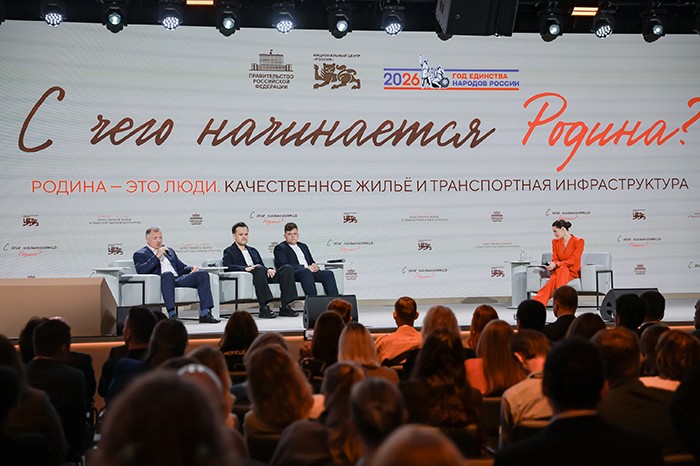

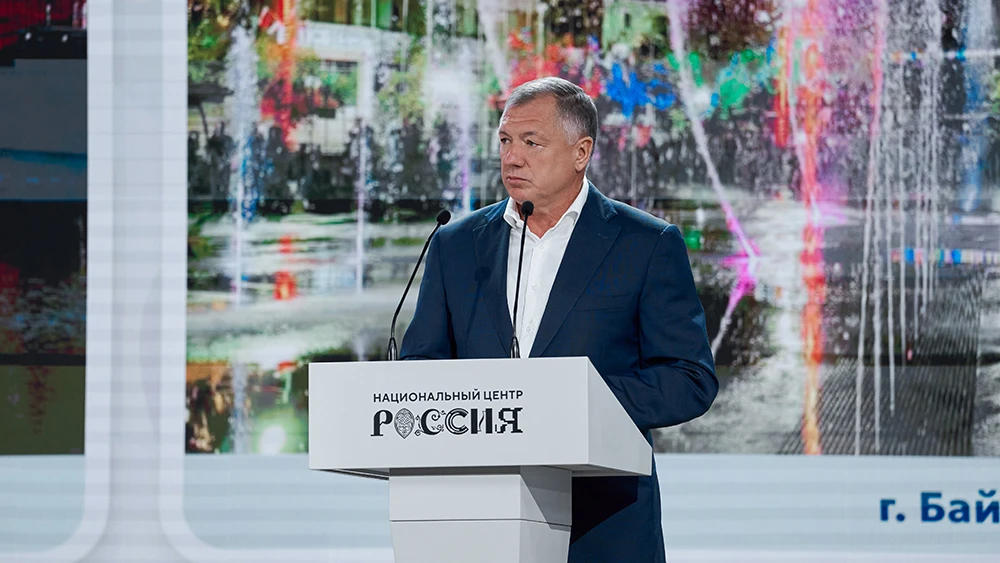
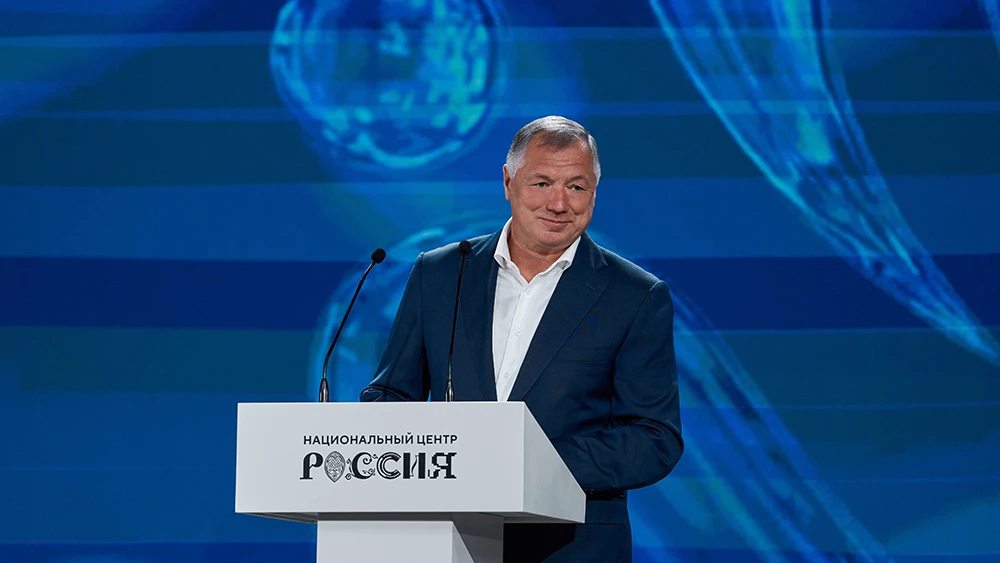
The third meeting in the "Motherland Is People" series was held on 26 August at the National Centre RUSSIA as part of the All-Russian project "What Does the Motherland Begin With?".
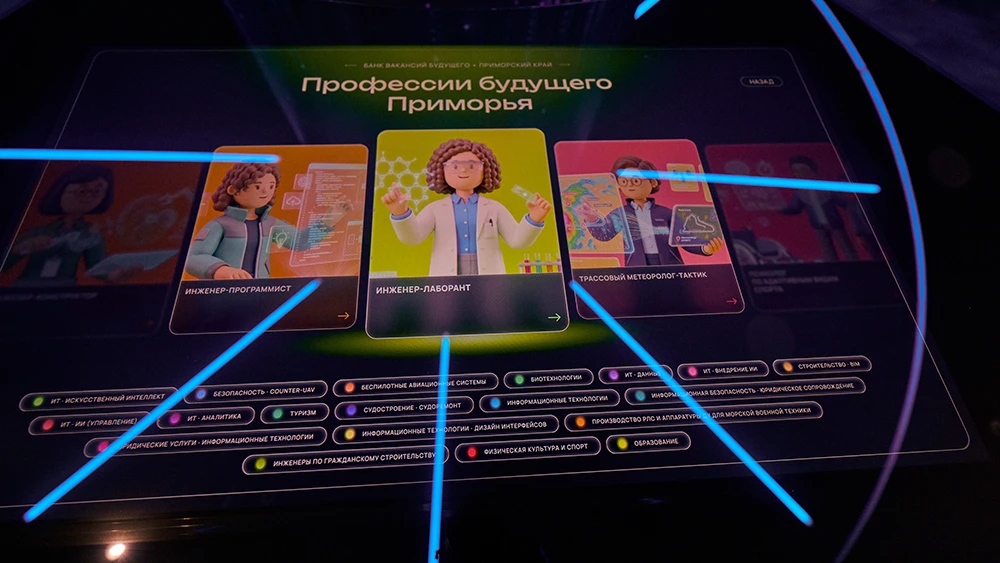
A new exposition titled "Primorye of the Future. Job Bank" has opened at the National Centre RUSSIA in the Primorye Territory.


