


"Everything out of nothing": the Hall of inventions explores the evolution of 3D printing

One of the greatest masters of science fiction, Philip K. Dick, always had a knack for predicting the future. His works are filled with ideas and concepts that later found their way into the real world. One such realized idea is the 3D printer — a universal device for creating tangible spatial objects from various materials. The Hall of Inventions at the National Centre RUSSIA tells the story of its creation.
Born from imagination, the 3D printer was first envisioned in Philip K. Dick’s work "Nick and the Glimmung" — his only children’s novel, published in 1966. Using this device, an alien could print any item in mere seconds. "One by one they handed over their precious belongings to Lord Blue, and the great old printer, quivering with effort, reproduced them," wrote Philip K. Dick.

Dick’s visionary concept anticipated the advent of 3D printing 18 years before a patent for such a device was issued. In 1971, Johannes F. Gottwald patented a machine for printing with molten metal, and the first 3D printer as we know it today was developed in the 1980s by Chuck Hull. He founded 3D Systems Corporation and filed a patent application for the "Apparatus for Production of Three-Dimensional Objects by Stereolithography."
1988 marked the launch of the world’s first commercially available 3D printer from 3D Systems. In the same year, American entrepreneur Scott Crump filed a patent for Fused Deposition Modeling technology, which remains the most popular among budget 3D printing devices. Today, 3D printers are widely used in architecture, industrial design, engineering, jewelry-making, medicine, and many other fields. Inspired by the ideas of writers and visionaries, we can not only dream of a new world but actively build it.
The Hall of Inventions at the National Centre RUSSIA is open daily except Mondays, from 10:00 to 20:00. Free guided tours with experienced guides depart every 15 minutes from the main information desk.
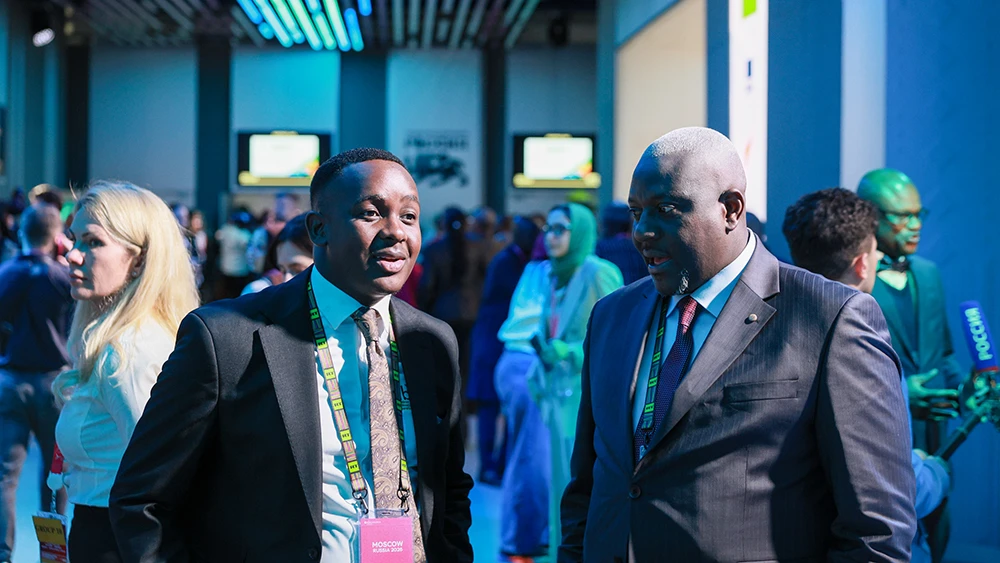
International guests spoke warmly of the National Centre RUSSIA, which served as a shared venue for the International Press Centre for the two summits and the Russia–Africa Media Forum.
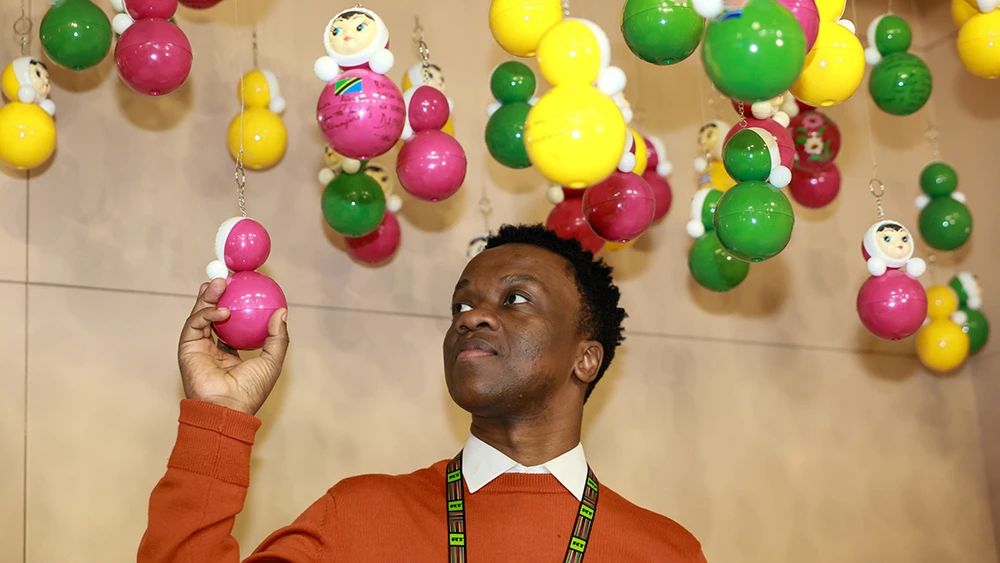
The nevalyashka doll is one of the most recognisable symbols of the National Centre RUSSIA.
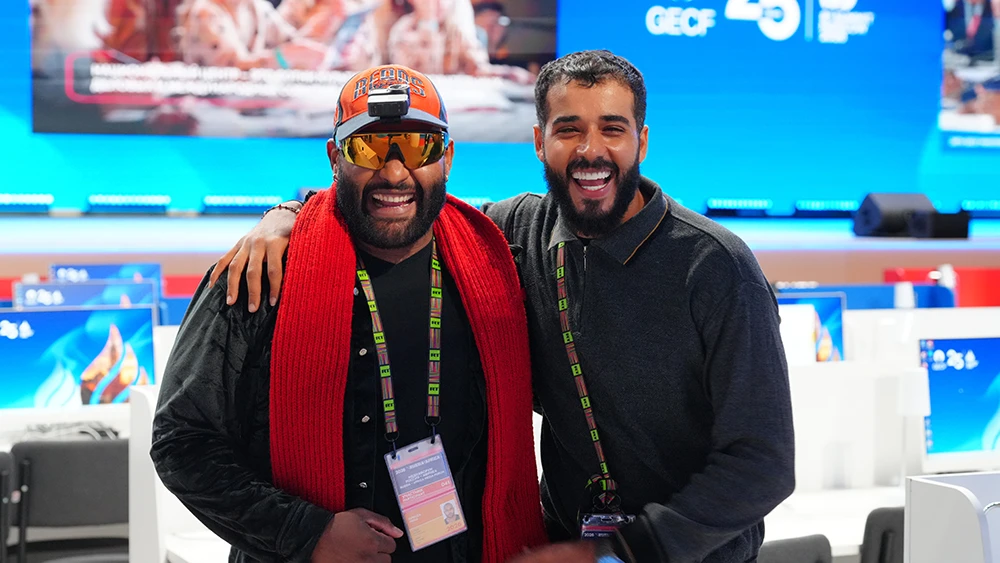
Foreign journalists and bloggers from Africa who visited the National Centre RUSSIA for the first time were impressed by the venue's beauty, scale and atmosphere


